Request a Demo

Camera-Based Attendance at Scale: Accuracy, Reliability, and Real-World Performance

Introduction: Why Attendance Accuracy Became a Strategic Priority 

Attendance tracking was once considered a routine administrative function — a basic HR necessity with limited strategic value. For decades, organizations relied on manual registers, punch cards, and later, swipe-based systems to record employee presence. Accuracy was desirable, but errors were often accepted as inevitable. 

That perception has changed dramatically. 

Over the last decade, enterprises and retail chains have grown more distributed, more compliance-driven, and more cost-sensitive. Attendance accuracy today directly impacts: 

       
  • Payroll integrity
  •    
  • Workforceutilization
  •    
  • Operational readiness
  •    
  • Compliance and audit outcomes

According to multiple global workforce studies, even a 1–2% attendance inaccuracy rate can translate into millions in annual payroll leakage for large organizations. This realization has pushed attendance systems from the HR department into finance, operations, and executive oversight

It is in this context that camera-based attendance systems and CCTV attendance software have emerged as a reliable, scalable alternative. 


The Evolution of Attendance Systems: From Manual Logs to Vision-Based Tracking 

Phase 1: Manual & Mechanical Systems 

Before the 1990s, attendance relied heavily on: 

       
  • Paper registers
  •    
  • Mechanical punch cards
  •    
  • Supervisor verification

These systems were: 

       
  • Highly error-prone
  •    
  • Labor-intensive
  •    
  • Impossible to audit at scale

Studies from the manufacturing sector in the 1980s showed error rates exceeding 7–10% in manual attendance logs, largely due to proxy marking and delayed reconciliation. 


Phase 2: Card & RFID-Based Attendance 

The late 1990s and early 2000s introduced: 

       
  • ID cards
  •    
  • RFID badges
  •    
  • Swipe-based attendance systems

While these improved digitization, they introduced new problems: 

       
  • Card sharing (“buddy punching”)
  •    
  • Lost or damaged cards
  •    
  • Manual exception handling

Research consistently showed that card-based systems reduced errors but did not eliminate proxy attendance, especially in large teams and shift-based operations. 


Phase 3: Biometric Attendance Systems 

Biometric systems promised identity certainty through: 

       
  • Fingerprint scanners
  •    
  • Palm readers
  •    
  • Iris recognition

Initially adopted widely across enterprises and factories, biometrics improved verification but faced challenges: 

       
  • Hygiene concerns (especially post-2020)
  •    
  • Hardware dependency and maintenance
  •    
  • Queue formation during peak hours
  •    
  • Employee resistance and union scrutiny

Large-scale deployments revealed that biometric systems often shifted errors rather than eliminating them, particularly during rush hours. 


Phase 4: Camera-Based Attendance Systems 

Advances in computer vision, combined with widespread CCTV deployment, enabled a new model: attendance through passive visual verification

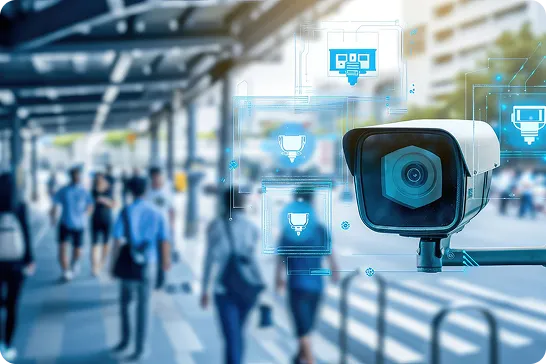
camera-based attendance system uses existing CCTV cameras to record attendance automatically as people enter or exit predefined zones — without requiring any active action from employees. 

This transition fundamentally changed attendance from a transaction to a behavioral event


What Is Camera-Based Attendance? 

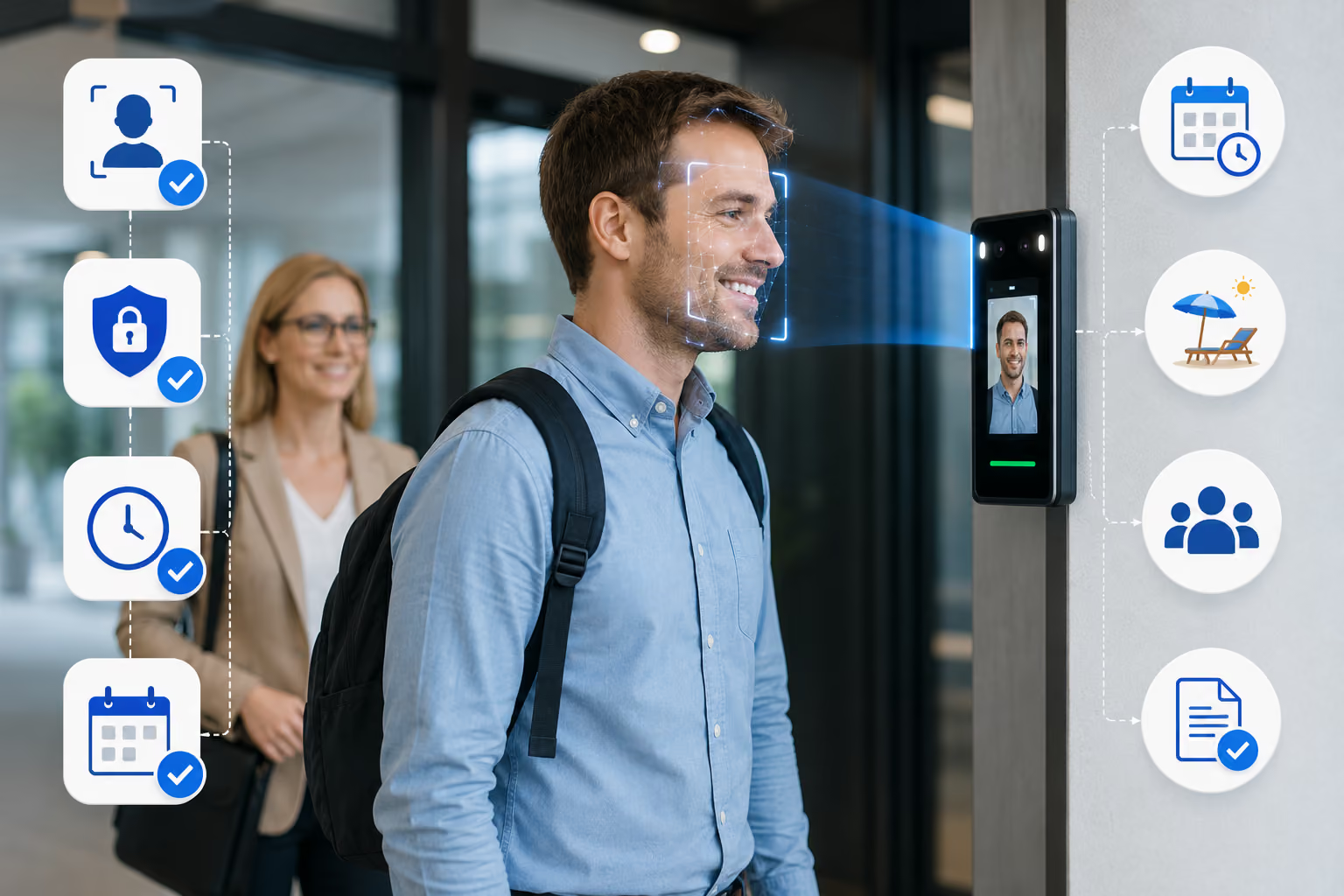
Camera-based attendance uses CCTV cameras combined with face recognition attendance technology to: 

       
  • Identifyindividuals
  •    
  • Record entry and exit timestamps
  •    
  • Syncattendance data with HR and payroll systems

Key characteristics: 

       
  • No cards, apps, or devices
  •    
  • No queues or bottlenecks
  •    
  • Continuous, real-time capture

Common deployment environments include: 

       
  • Enterprise office entrances
  •    
  • Retail store gates
  •    
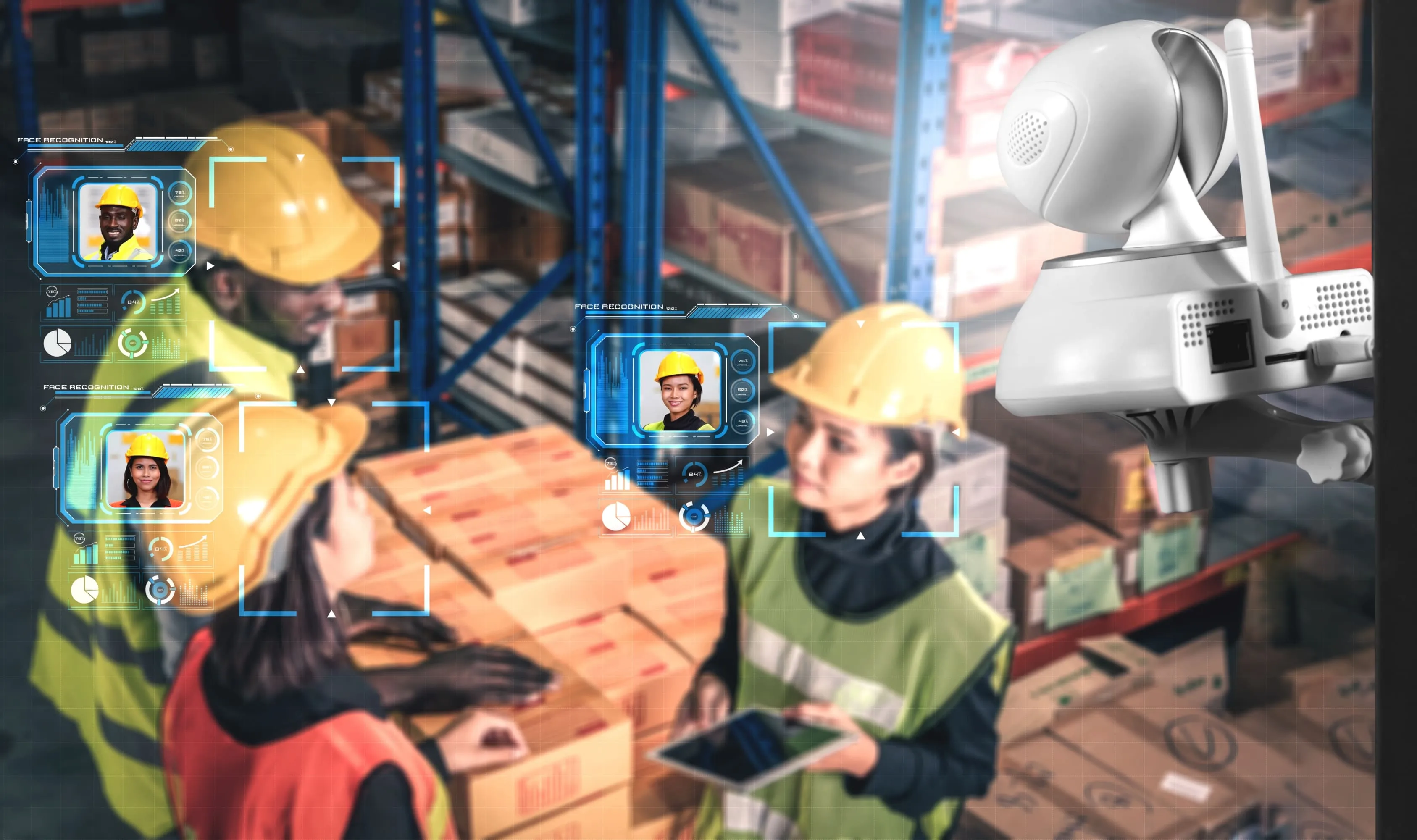
  • Factory access points
  •    
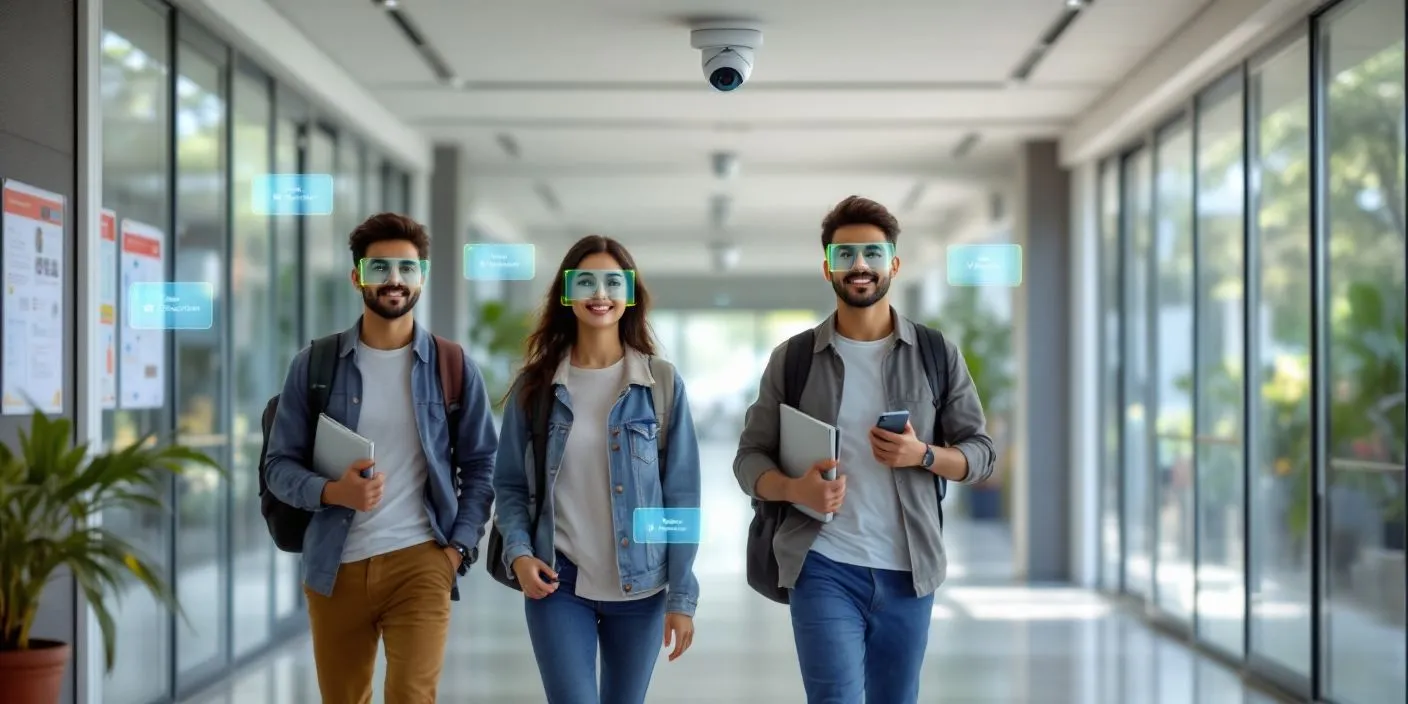
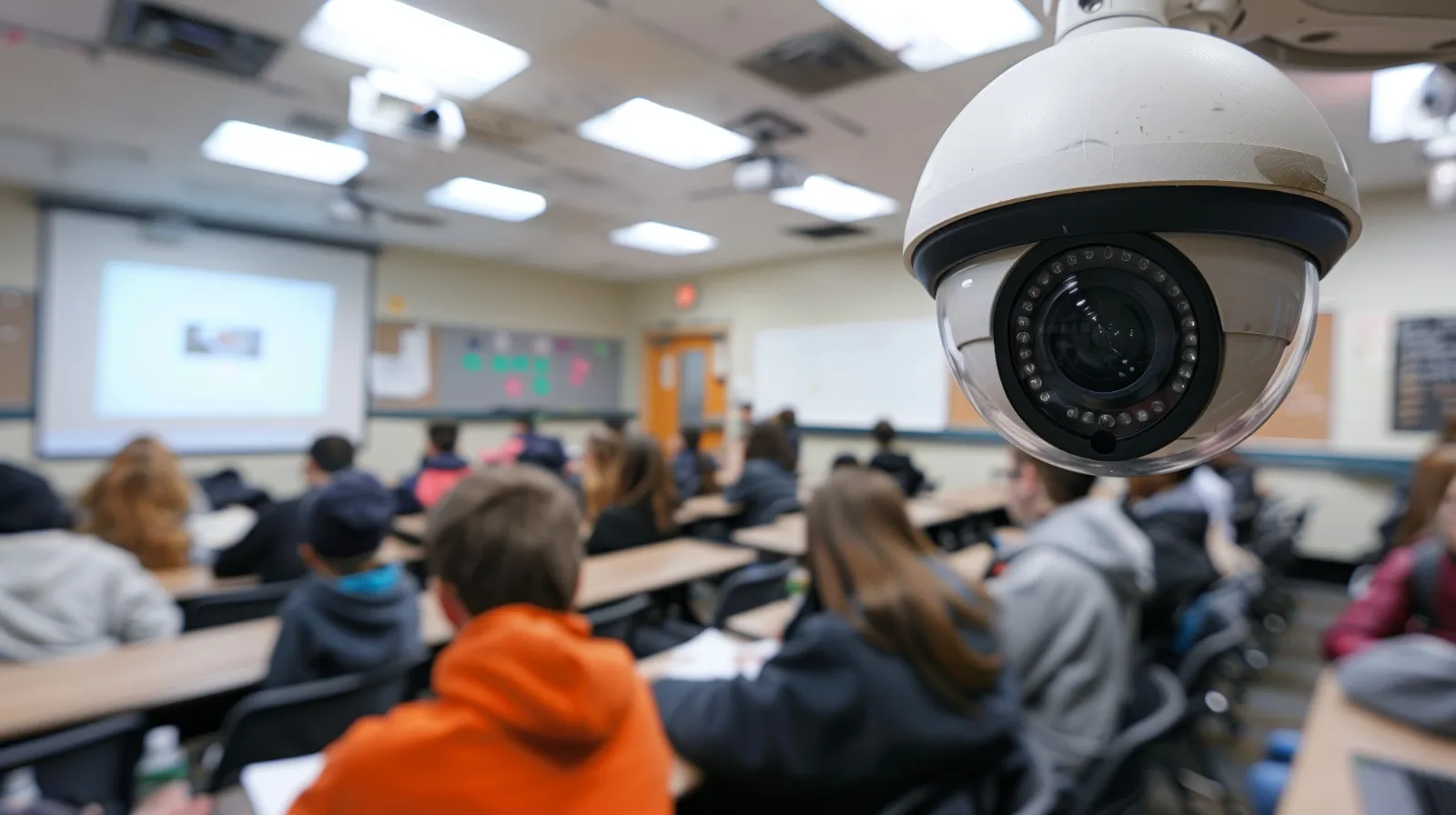
  • Educational campuses and classrooms


Understanding Accuracy: What “Accurate” Actually Means 

Attendance accuracy is often misunderstood as “zero error.” In reality, accuracy is defined by: 

       
  • Consistency(same logic across locations)
  •    
  • Auditability(verifiable timestamps and logs)
  •    
  • Operational reliability(minimal manual correction)

Camera-based attendance improves accuracy because it: 

       
  • Eliminatesdependency on user behavior
  •    
  • Reduces missed punch-ins
  •    
  • Captures attendance passively

In large deployments, organizations report: 

       
  • 30–50% reduction in attendance-related disputes
  •    
  • Significant reduction in manual reconciliation effort


Why Camera-Based Attendance Scales Better Than Traditional Systems 

1. Infrastructure Leverage 

Most enterprises and retailers already have CCTV infrastructure in place. Camera attendance systems: 

       
  • Reuse existing cameras
  •    
  • Avoid per-user hardware dependency
  •    
  • Reduce deployment and maintenance costs


2. High-Footfall Performance 

Unlike biometric or card systems, camera-based attendance: 

       
  • Does not slow down entry flow
  •    
  • Performs consistently during peak hours
  •    
  • Avoids queue-based inaccuracies

This is especially critical in retail stores and large office campuses. 


3. Centralized Visibility 

Camera attendance software enables: 

       
  • Unified dashboards
  •    
  • Location-wise attendance analytics
  •    
  • Enterprise-wide workforce visibility

This level of visibility was previously impossible without heavy manual intervention. 


Enterprise and Retail: Shared Need, Different Contexts 

Enterprise Context 

Enterprises prioritize: 

       
  • Payroll accuracy
  •    
  • Compliance and audit trails
  •    
  • Multi-location consistency

Camera-based attendance supports: 

       
  • Standardized attendance logic
  •    
  • Seamless HRMS and payroll integration
  •    
  • Reduced operational overhead


Retail Context 

Retail operations require: 

       
  • Fast staff movement
  •    
  • Shift overlap handling
  •    
  • Store readiness visibility

CCTV-based attendance systems work because: 

       
  • Staff attendance is captured without interruption
  •    
  • Store operationsremainunaffected
  •    
  • Workforce availability is visible in real time


What Research Shows About Attendance Automation 

Multiple workforce studies highlight that: 

       
  • Manual attendance correction consumes3–5 hours per manager per week
  •    
  • Attendance inaccuracies contribute to2–5% payroll leakage annually
  •    
  • Automated attendance systems significantly reduce reconciliation cycles

Camera-based attendance addresses these inefficiencies by design. 


Data Privacy and Governance Considerations 

Modern camera attendance systems are built with: 

       
  • Role-based access controls
  •    
  • Secure data storage
  •    
  • Compliance-ready audit logs

Organizations increasingly prefer attendance systems that integrate governance from day one, rather than treating it as an afterthought. 


Why Organizations Are Standardizing on Camera Attendance 

Across enterprises and retail chains, the shift toward camera-based attendance is driven by: 

       
  • Operational simplicity
  •    
  • Improved accuracy at scale
  •    
  • Reduced dependency on hardware and human action

It aligns with broader trends toward automation, visibility, and data-driven operations


Conclusion: Attendance as an Intelligence Layer 

Attendance has evolved from a basic record-keeping function into a strategic operational signal. Camera-based attendance systems represent this evolution — delivering accuracy, scalability, and reliability across enterprise and retail environments. 

For organizations operating at scale, camera attendance is not about replacing systems — it is about eliminating friction, improving trust, and enabling better decisions. 


Bringing Camera-Based Attendance to Life with Vizenta AI 

Vizenta AI helps enterprises and retail organizations transform their existing CCTV infrastructure into an accurate, privacy-first camera-based attendance system—delivering real-time workforce visibility, seamless HRMS integration, and enterprise-grade reliability at scale. 

If you’re exploring a modern, scalable approach to attendance that works across offices, stores, and campuses, book a personalized demo with Vizenta AI to see how camera attendance can fit seamlessly into your operations.