Ghost Shift Detection: How AI Attendance Saves Retailers Millions
The Invisible Payroll Drain Nobody Talks About
Walk into any retail boardroom discussion about shrinkage, and you’ll hear about shoplifting, organized retail crime, and supplier fraud. What you won’t hear — because it’s harder to see and even harder to measure — is the payroll drain happening right under the surface.
Ghost shifts are one of retail’s most persistent and underreported operational problems. A ghost shift occurs when an employee is recorded as working — their badge shows clocked in, their schedule says present — but they’re not actually on the sales floor performing their job.
According to the American Payroll Association, 75% of US businesses lose money to some form of time theft. The estimated cost? $373 million annually across US employers, with retail among the hardest-hit sectors. Nucleus Research puts it more bluntly: the average employee who engages in time theft steals 4 hours and 5 minutes per week — roughly 5% of their total working hours.
For a mid-size retailer with $500 million in annual revenue and labor costs at 12% ($60M), even a 3% ghost shift rate translates to $1.8 million in wasted payroll every year. For a larger chain with 500+ locations, the number climbs into the tens of millions.
How Ghost Shifts Actually Happen
Ghost shifts aren’t always dramatic acts of fraud. They take many forms, some obvious and some surprisingly subtle:
1. Buddy Punching
The classic version. Employee A asks Employee B to badge them in while they show up late — or don’t show up at all. With badge-based and PIN-based systems, this is trivially easy. The American Payroll Association found that buddy punching specifically costs US employers an estimated $373 million per year.
2. Early Departure After Clock-In
An employee badges in at the start of their shift, appears briefly on the floor, then disappears — to their car, a break room, or simply leaves the premises. They return to badge out at the end of their scheduled shift.
3. Extended Unauthorized Breaks
A 15-minute break becomes 45 minutes. A lunch break extends by an hour. Individually these seem minor, but across dozens of employees and hundreds of shifts per week, the accumulated lost labor is staggering.
4. Schedule Gaming
Employees clock in at the start of a shift they know will be slow, do minimal work, and rely on the fact that in a large retail operation, individual accountability is nearly impossible to enforce manually.
5. Manager Complicity
In some cases, store-level managers are aware of attendance issues but don’t address them — either because they lack the tools to verify, because they’re short-staffed and can’t afford to lose anyone, or because they’re participating themselves.
The common thread across all of these scenarios: the time-and-attendance system says one thing, and reality says another. The gap between recorded attendance and actual presence is the ghost shift.
Why Traditional Time-and-Attendance Systems Fail
Every generation of time-tracking technology has introduced a new mechanism to verify identity at clock-in. And every generation has been defeated by the same fundamental limitation: they verify a credential at a single moment in time, not ongoing presence.
Punch cards and timesheets: Easily falsified. Any employee can punch another’s card.
Badge/RFID readers: Better, but badges are physical objects that can be shared, left behind, or used by anyone.
PIN pads: PINs are the most commonly shared credential in any workplace. A four-digit code is trivial to pass to a colleague.
Fingerprint scanners: Significantly better for identity verification, but they have practical limitations in retail environments. Employees with wet, dirty, or calloused hands — common in receiving, stockrooms, and food service areas — often can’t get a clean scan. This leads to workarounds, overrides, and ultimately, holes in the data.
Even the best of these systems shares a critical flaw: they confirm someone was at the clock-in terminal at 9:00 AM. They cannot confirm that same person was on the sales floor at 9:15, 10:30, or 2:00 PM. They track events, not presence.
The Camera-Based Attendance Approach
Here’s the irony: most retail stores already have the infrastructure to solve the ghost shift problem. They just aren’t using it for this purpose.
A typical big-box retail store operates 60-100 CCTV cameras covering entrances, checkout lanes, the sales floor, stockrooms, and receiving areas. These cameras capture everything — but traditionally, they’re only reviewed after an incident occurs.
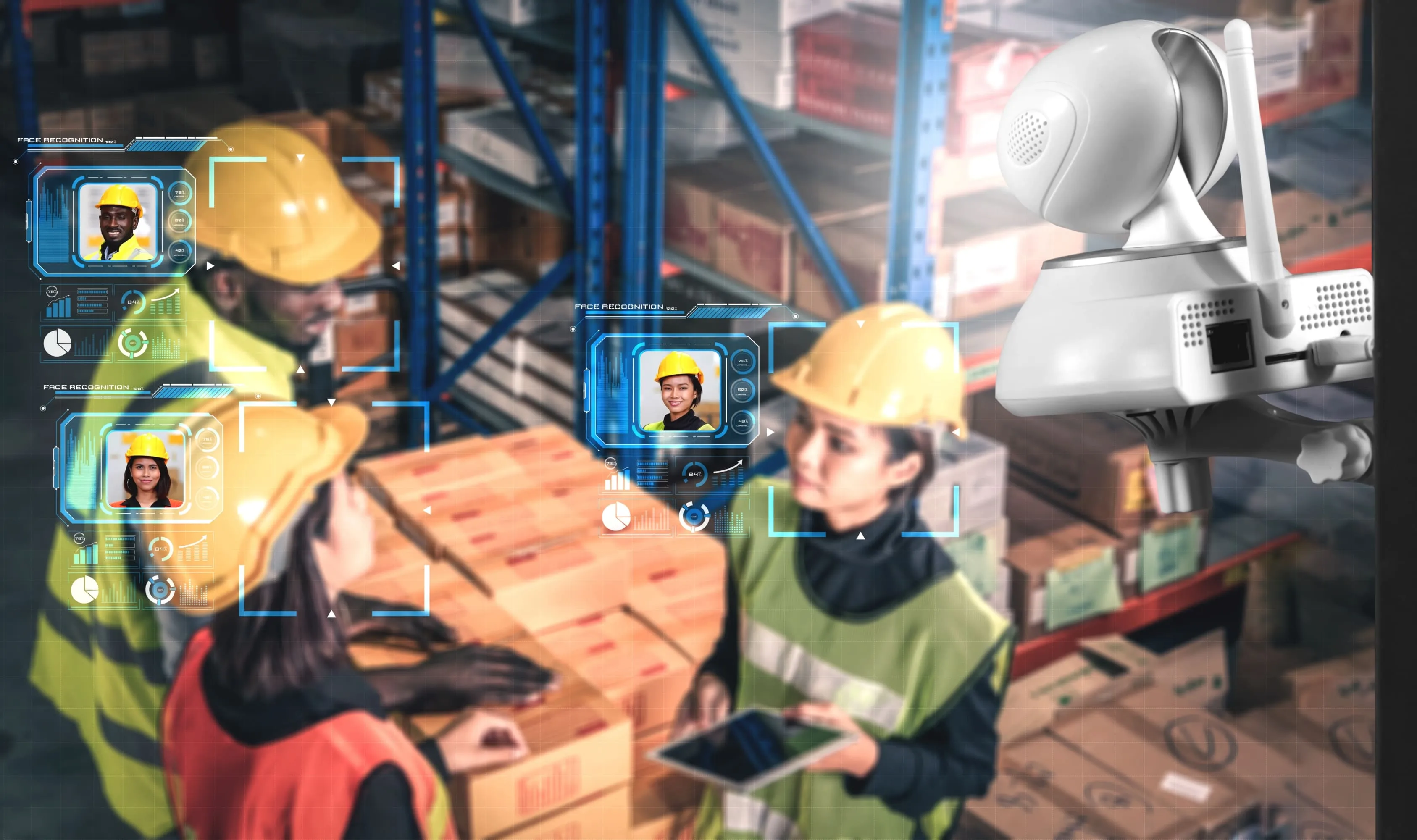
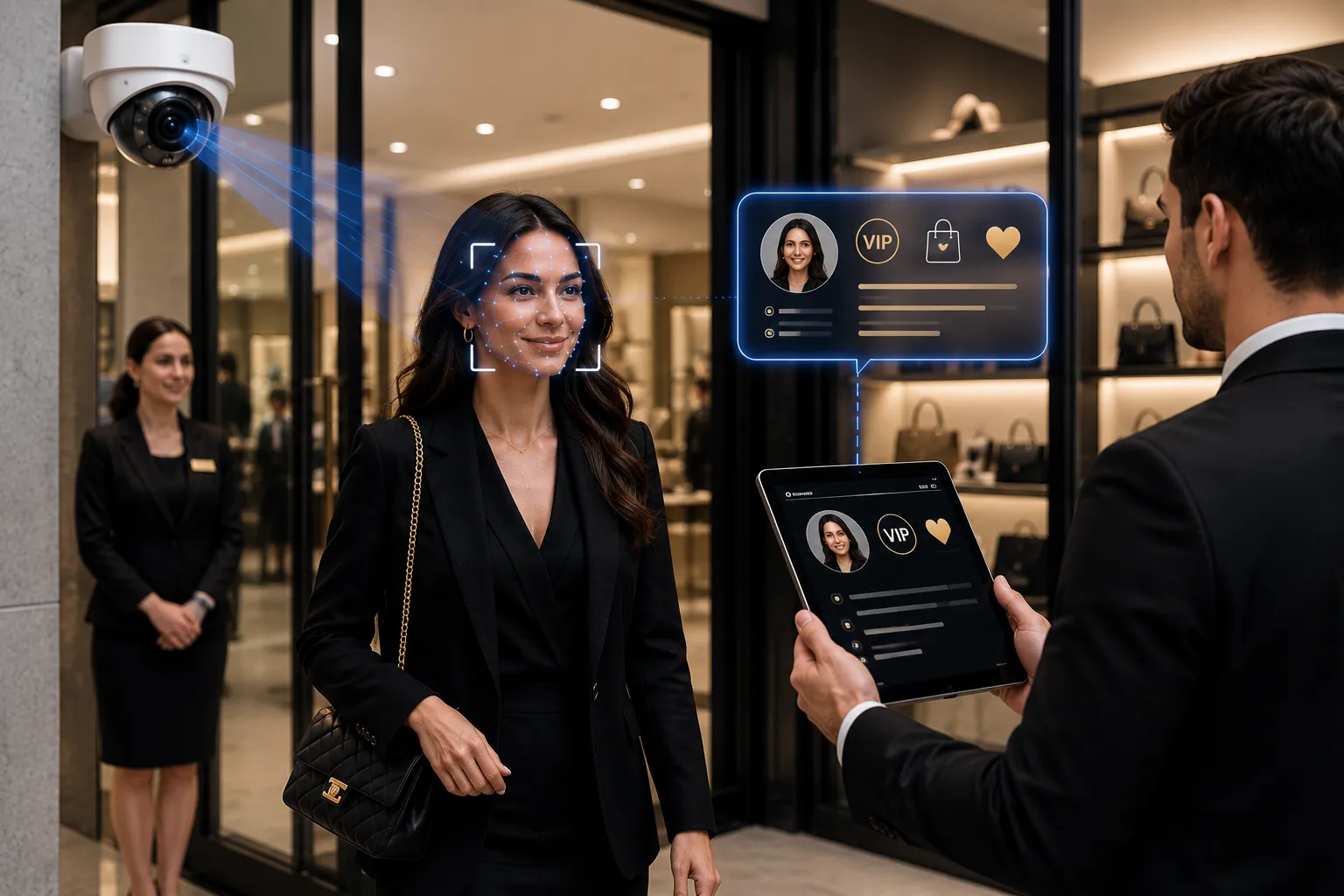
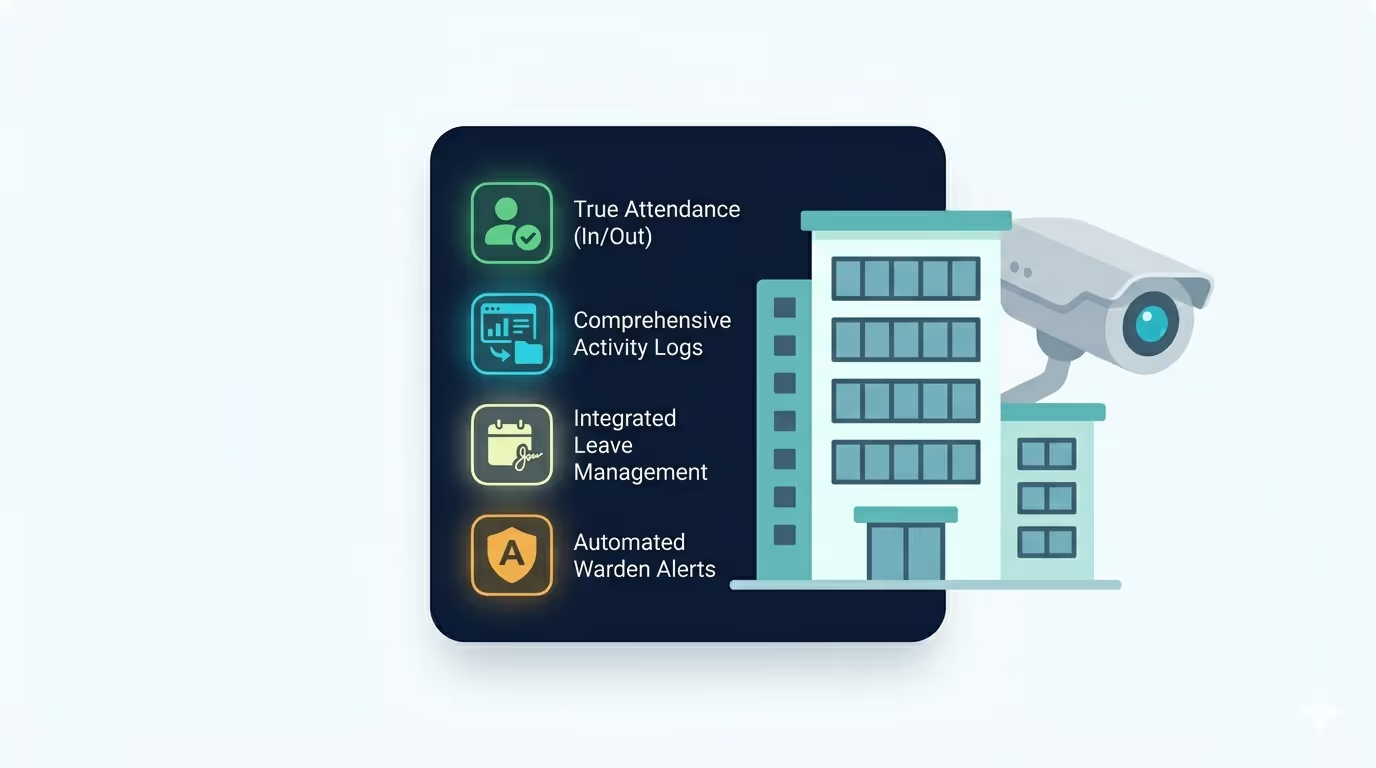
AI-powered attendance flips this model. Instead of recording footage for post-incident review, computer vision AI analyzes camera feeds continuously, recognizing enrolled employees and tracking their presence in real-time.
The process works like this:
Enrollment: Each employee’s face is registered in the system during onboarding, with their informed consent.
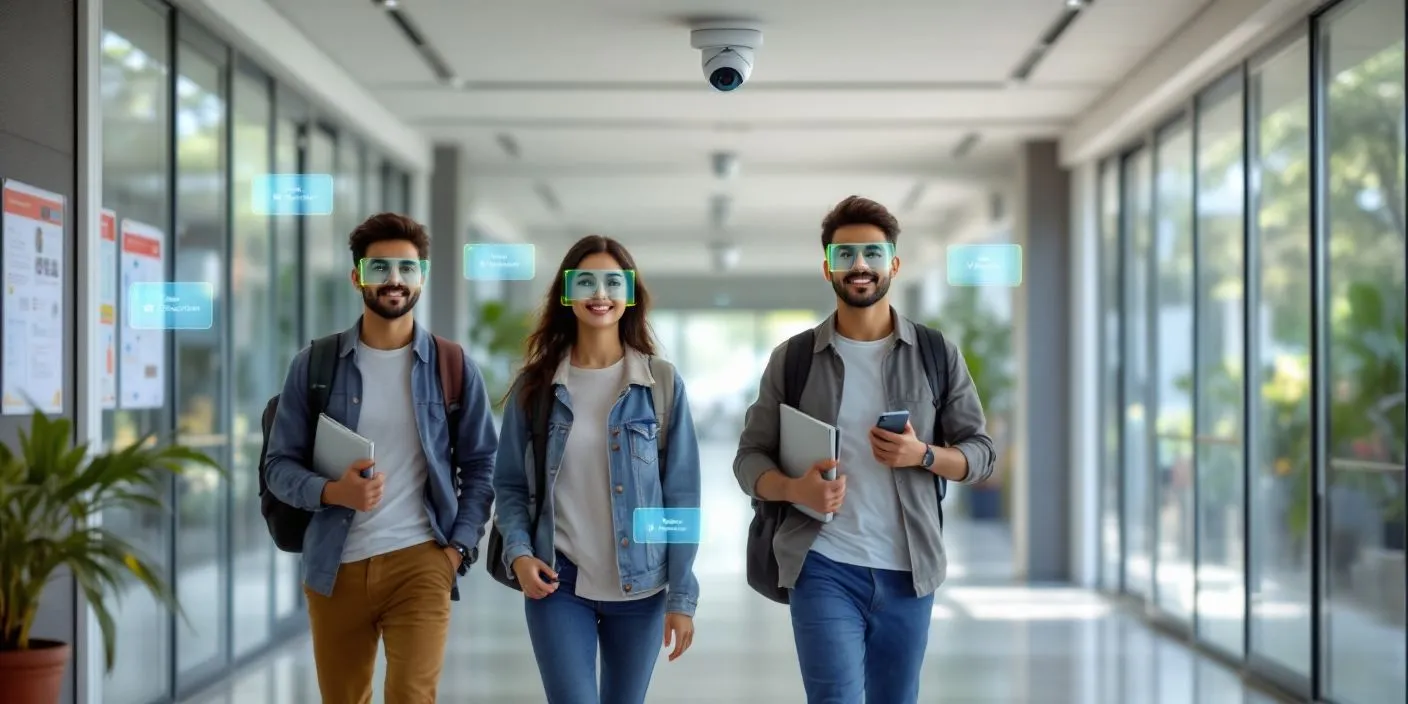
Passive detection: As employees move through the store, cameras automatically detect and recognize them. No badge swipe, no fingerprint scan, no interaction with any device. They simply walk in and work.
Continuous presence verification: The system doesn’t just record clock-in. It periodically confirms that scheduled employees are actually present in their assigned areas throughout their shift.
Anomaly alerts: If a scheduled employee isn’t detected within a configurable time window (say, 15 minutes after shift start, or absent from the floor for more than 30 minutes), the system sends an alert to the store manager.
Automated time records: Actual presence data feeds directly into the payroll system, replacing badge-based clock events with verified, camera-confirmed attendance records.
What Makes This Different From Just Watching Cameras
Store managers have always had cameras. What they haven’t had is the ability to systematically analyze what those cameras see, across all employees, all shifts, all locations, simultaneously.
The human approach to camera-based attendance verification doesn’t scale. A manager can’t watch 60 camera feeds and manually confirm the presence of 30+ employees across an 8-hour shift. The AI approach automates what would otherwise require an impossible level of manual oversight.
Key differentiators:
No new hardware required: The system connects to your existing CCTV network. No camera replacements, no additional installations.
Edge processing: All video analysis happens locally on a compact edge device in your server room. No video data is sent to the cloud, no bandwidth impact, no privacy concerns about footage leaving your premises.
Touchless and passive: Employees don’t need to stop, swipe, scan, or interact with any device. The system recognizes them automatically as they go about their work.
Works across conditions: Unlike fingerprint scanners, facial recognition works regardless of hand condition, gloves, or hygiene concerns. Unlike badges, a face can’t be shared.
The ROI Case
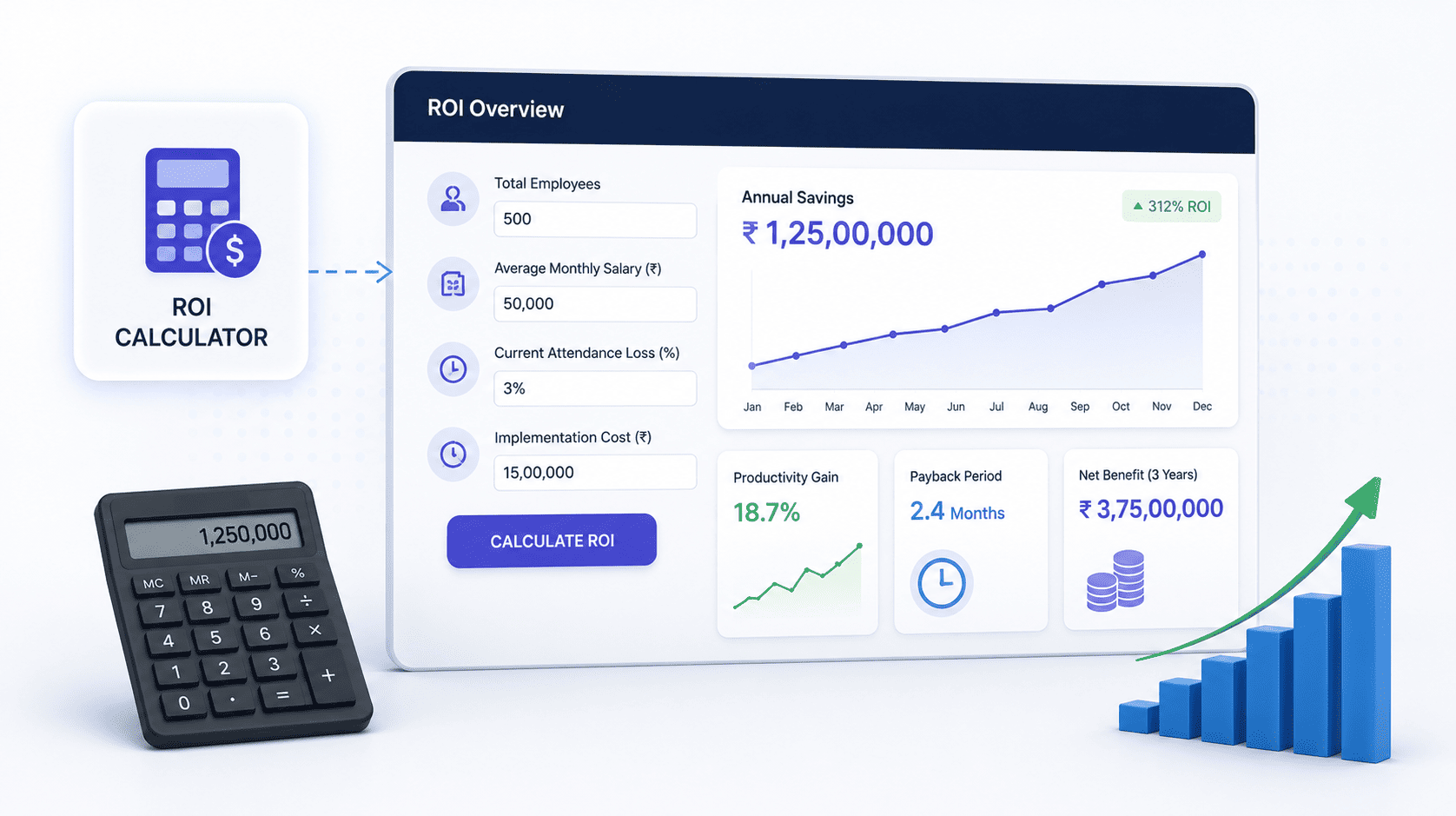
The financial case for AI-powered attendance is straightforward because the math is conservative and the baseline losses are well-documented.
Consider a retail chain with 200 locations:
Average 30 hourly employees per location
Average hourly wage: $16
If 5% of clock-ins are fraudulent or inaccurate (a conservative estimate given APA data)
That’s 300 phantom labor hours per day across the chain
At $16/hour, that’s $4,800/day or $1.75 million per year in wasted payroll
Buddy punching reduced to zero — facial recognition is non-transferable
12-18% reduction in payroll discrepancies within the first quarter
ROI within 90 days from payroll savings alone
95%+ employee acceptance rate — most employees prefer not carrying badges or remembering PINs
Improved store readiness — managers gain real-time visibility into who is on the floor
Beyond Payroll: The Operational Ripple Effect
Ghost shifts don’t just waste money. They create a cascading set of operational problems that compound over time:
Understaffed sales floors lead to poor customer service, longer wait times, and lost sales. A store that thinks it has 12 employees working might actually have 9 — and that gap shows in customer satisfaction scores.
Inaccurate staffing data makes it impossible to optimize future schedules. If your historical data says 15 people worked the Tuesday morning shift, but only 12 were actually present, your labor model is built on a lie.
Manager time is consumed by manually chasing attendance issues, resolving clock-in disputes, and processing corrections — time that should be spent running the store.
Employee morale erodes when honest workers see colleagues gaming the system without consequence. This is one of the most corrosive and least measured impacts of ghost shifts.
Privacy, Consent, and Compliance
Any facial recognition deployment in the workplace must be handled with transparency and respect for employee rights. This isn’t optional — it’s both a legal requirement and a practical necessity for adoption.
Best practices include:
Informed consent: Employees are told exactly how the system works, what data is collected, and how it’s used. Consent is obtained as part of onboarding.
Purpose limitation: The system is used strictly for attendance verification — not for surveillance, performance monitoring, or behavioral tracking.
On-premise processing: Edge computing means all facial analysis happens locally. No biometric data leaves the store’s network.
Regulatory compliance: Adherence to BIPA (Illinois), CCPA (California), Texas CUBI, Washington biometric law, and all applicable state regulations.
Data retention limits: Biometric templates are deleted upon employment termination.
Transparency: Clear signage and documentation about the system’s operation.
Getting Started: A Practical Roadmap
For retailers evaluating AI-powered attendance, the implementation path is well-established:
Baseline your current fraud rate. Audit a sample of 10-20 stores by comparing badge records against actual camera footage for two weeks. This establishes the size of the problem and builds the business case.
Start with high-impact locations. Focus on stores with the highest payroll-to-traffic discrepancies, highest turnover, or most clock-in disputes.
Pilot with 5-10 stores. Deploy on existing cameras, enroll employees with consent, and run for one quarter alongside the existing badge system to establish comparative data.
Measure rigorously. Track payroll savings, clock-in accuracy, store readiness scores, and manager time spent on attendance issues.
Scale based on data. Use the pilot results to build the chain-wide rollout plan and ROI projection.
The retailers winning the workforce management battle aren’t the ones with the biggest HR technology budgets. They’re the ones using the cameras they already have — intelligently.
Ready to eliminate ghost shifts in your stores?Learn how Vizenta AI turns your existing CCTV into an AI-powered workforce management system — no new hardware required.
We use cookies to improve your experience on our website.
✕
About Cookies on This Site
Please choose which functional and/or advertising cookies this site may collect:
Required Cookies
These cookies are necessary to manage the site and enable basic features to function.